When Agile Stops Working
Most teams aren't practicing Agile anymore — they're performing it. We call it the Ceremony Trap: the standups, sprints, and retros that outlived their purpose and quietly became theater. AI didn't break Agile; it arrived with a flashlight and showed us what was already hollow. Here's how to tell whether your ceremonies still create value — or just the appearance of it.
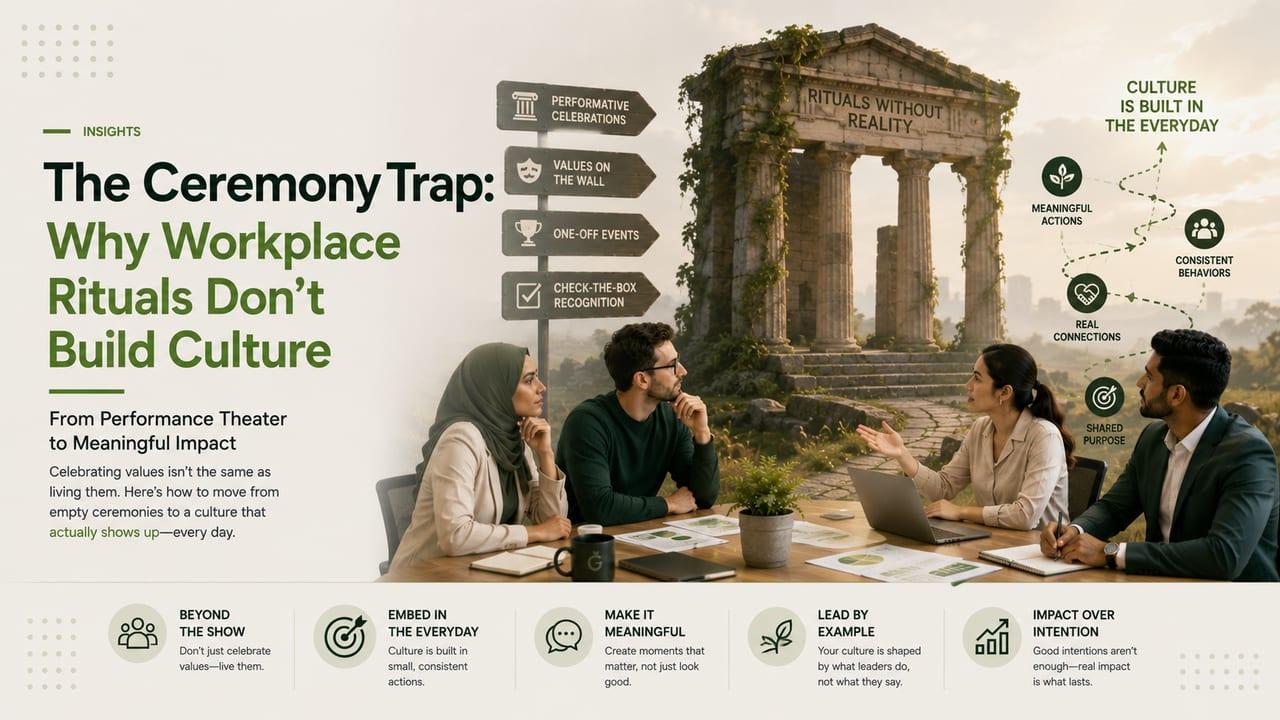
We have all been in that standup. The one where everyone says what they did yesterday, what they're doing today, and whether they have blockers — and absolutely nothing changes as a result. People log off. The Slack messages resume. The actual decisions get made in a side conversation fifteen minutes later.
We've been running these meetings for years. Most of us have stopped asking whether they work.
That's not a process problem. That's a culture problem — and it's one we, as People & Culture leaders, helped create by conflating Agile adoption with Agile transformation.
The Story We've Seen Too Many Times
A SaaS company in the region (mid-size, scaling fast, the kind of place where every hire feels like a bet on the future) decided two years ago to go fully Agile. New Scrum Master hired. JIRA restructured. All teams moved to two-week sprints. Leadership celebrated the transformation.
Twelve months later, their Head of Engineering pulled the People team aside. Burnout was rising. Top engineers were quietly job-hunting. The complaint wasn't too much work — it was too many meetings about work. Sprint planning on Monday. Standup every morning. Backlog grooming mid-week. Retrospective on Friday. Developers were spending nearly 30% of their week in Agile ceremonies, and less than 10% of that time was producing a decision that actually changed anything.
The irony? The company had adopted Agile to move faster. Two years in, they were moving slower — just more visibly.
We've seen versions of this story across the GCC tech sector. The names change. The outcome doesn't.
The Ceremony Trap: A Framework for What Goes Wrong
Organizational development research has a name for what happens when a process outlives its purpose but the organization keeps performing it: institutional isomorphism: the tendency of organizations to mimic structures that appear legitimate, even when those structures no longer serve the original function.
Agile, in many organizations, has become exactly this. Teams don't run standups because standups solve a problem. They run them because standups are what Agile teams do. The ceremony has replaced the intent.
We call this the Ceremony Trap, and it has three stages:
- Stage 1 — Adoption. The ritual is introduced with clear purpose. The standup creates visibility. Sprint planning creates alignment. Retrospectives create learning. It works.
- Stage 2 — Habituation. The ritual becomes routine. Teams stop asking why. The standup becomes a status report. Planning becomes negotiation. Retros become a complaints box nobody empties.
- Stage 3 — Theater. The ritual continues because stopping it feels like abandoning Agile. No one wants to be the team that stopped doing retrospectives. So the meetings run, the boards update, and the actual work happens somewhere else.
What the Data Is Telling Us (And We're Choosing to Ignore)
The evidence that something is fundamentally broken has been accumulating for years. AI has simply made it impossible to look away.
The Numbers That Should Reframe Your Next Leadership Conversation
- Forrester (2025): 95% of organizations say Agile is critical to their operations, yet only 7% report high proficiency applying it at scale.
- Digital.ai 18th Annual State of Agile Report (2025): 65% of teams have aligned tools, 64% have DevOps pipeline visibility, and outcomes have not improved.
- Google DORA (2025): AI adoption correlates with both higher delivery throughput and higher delivery instability. AI amplifies what already exists — good or broken.
- GitClear (2025): Analysis of 211 million lines of code found refactoring activity fell from 25% of all code changes in 2021 to under 10% in 2024. Duplicate code blocks increased eightfold. Teams are producing more and maintaining less.
- Parabol: 61.6% of Agile teams run their standups synchronously — in a hybrid, AI-assisted, globally distributed world.
- Digital.ai (2025): only 15% of business leaders actively shape Agile practices inside their organizations.
OD theorist Karl Weick's concept of sensemaking is useful here: organizations construct meaning from ambiguous situations through action and retrospection. The problem with Agile theater is that the retrospection (the retrospective) has become so ritualized it no longer generates real sensemaking. It generates a list of action items that don't get actioned.
Kent Beck, one of the original Agile Manifesto authors, made this clear in a 2025 interview: as AI tools handle execution, the skills that matter most become vision, milestone-setting, and managing complexity as a system evolves. In other words, the judgment Agile was supposed to protect time for is now the only thing that can't be automated. And most organizations are not developing it — they're scheduling it away into ceremony.
Is Your Agile Stuck in the Ceremony Trap?
Run through this honestly. Three or more signals means your organization isn't practicing Agile — it's performing it.
- Your standup answers don't change what anyone does that day
- Story points are estimated to satisfy the Scrum Master, not reflect reality
- Retrospectives produce the same action items every cycle, and nothing changes
- Nobody outside Engineering attends sprint reviews
- Velocity is used as a performance metric rather than a planning input
- "We can't do that until next sprint" is used to defer urgent, important decisions
- Agile is something HR enforces rather than something teams believe in
- You've adopted AI tools to accelerate sprints, but the quality of what you're deciding to build hasn't improved
- Your team cannot articulate what customer problem the current sprint is solving
- The last time a retrospective genuinely changed how your team works was more than three months ago
How did AI expose the Agile ceremony trap?
AI didn't dismantle Agile. It arrived with a flashlight and showed us what was already crumbling.
Here's the mechanism: AI tools now generate code in seconds, write test cases automatically, and optimize workflows in real time — without a sprint planning session. What used to justify a two-week iteration can now happen before the standup ends. The acceleration doesn't make teams more productive. It makes the gaps in their process suddenly, brutally impossible to ignore.
Teams with sharp thinking, honest backlogs, and genuine collaboration are using AI to ship the right things faster. Teams running Agile theater are using AI to ship more of the wrong things faster. The ceremonies haven't changed. The consequences of running empty ones just got much more expensive.
This is the uncomfortable truth AI has surfaced for us as People & Culture professionals: we have spent years measuring Agile adoption instead of Agile outcomes. We tracked whether teams had standups, not whether those standups produced better decisions. We celebrated sprint completion rates, not whether the right problems were being solved. We confused the map for the territory.
Questions for the Leaders in the Room
Before your next leadership team conversation about ways of working, sit with these:
- When did we last ask our teams whether Agile ceremonies are creating value — or just creating the appearance of it?
- If AI could attend every standup and summarize what was said, would anything change? If not, why are we still running them?
- Are we rewarding people who ask whether we're building the right thing, or only people who ship what's in the backlog on time?
- What percentage of our learning and development investment goes toward judgment, strategic thinking, and complexity management versus process compliance?
- If we stopped calling it Agile tomorrow, if we dropped the labels entirely — what would our teams actually keep doing, and what would quietly disappear?
The Reckoning
The Agile Manifesto was written in revolt against rigid, bureaucratic, process-heavy systems that were suffocating human ingenuity. In 2025, Agile itself has become that system — just with better branding and a Jira license.
AI didn't create that irony. It just made it too visible to keep ignoring.
The organizations that will navigate what comes next are not the ones running the most disciplined ceremonies. They're the ones that have cultivated something far harder to measure: the capacity to think clearly about what to build, why it matters, and whether the people building it have enough space to actually care.
Agile isn't gone. It's been hollowed out — and we filled the shell with meetings. The question isn't whether to keep Agile. It's whether we have the courage to practice it for real this time.
Frequently asked questions
- What is the ceremony trap?
- When a team keeps performing agile rituals after they have stopped producing the outcome they existed for. The stand-up still happens; it just no longer unblocks anything.
- How do you know a practice has become a ritual?
- Ask what decision it changes. A working practice regularly produces a different action than would have happened without it. A ritual produces attendance.
- Does this mean agile does not work?
- No. It means the ceremonies were never the point. The practices encoded a set of problems — slow feedback, hidden blockers, invisible priorities — and where those problems changed shape, the practice has to change with them.
- How did AI expose agile ceremony theater?
- AI now generates code, tests, and workflow changes in seconds, so work that once justified a two-week iteration can finish before the standup ends. It did not break the rituals; it removed the delay that hid whether they were adding anything.
- What are the three stages of the ceremony trap?
- Adoption, where a ritual is introduced with clear purpose and works; habituation, where teams stop asking why and it becomes routine; and theater, where the meeting continues only because stopping it feels like abandoning agile.
Related articles
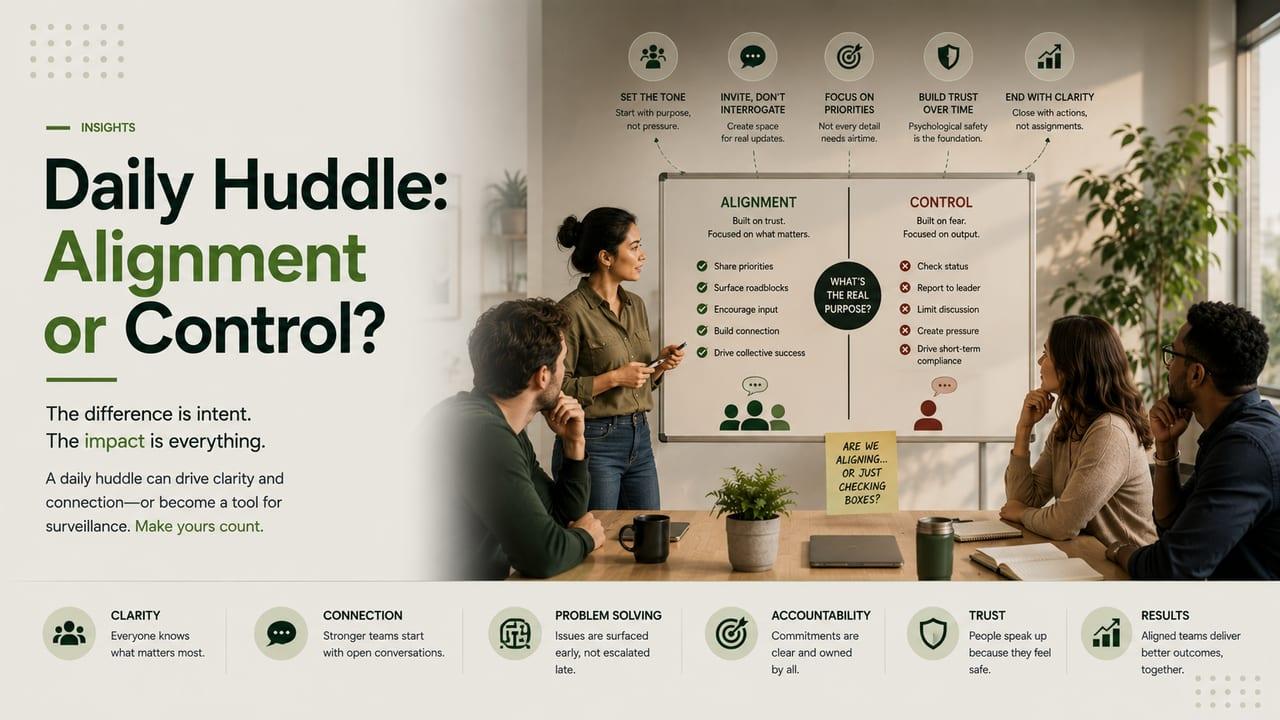 Organization DevelopmentIs Your Daily Huddle for Alignment — or Control?8 min read
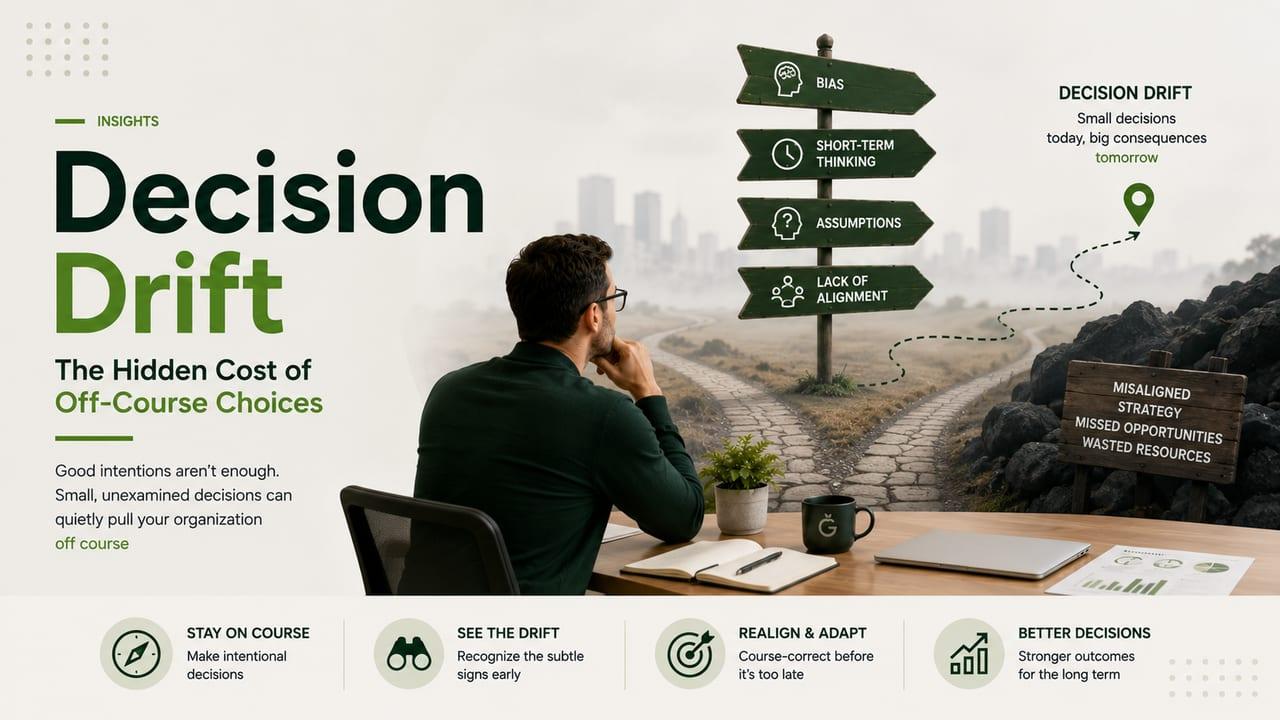 Organization DevelopmentDecision Drift: Are Your People's Decisions Actually Aligned With Your Strategy?7 min read
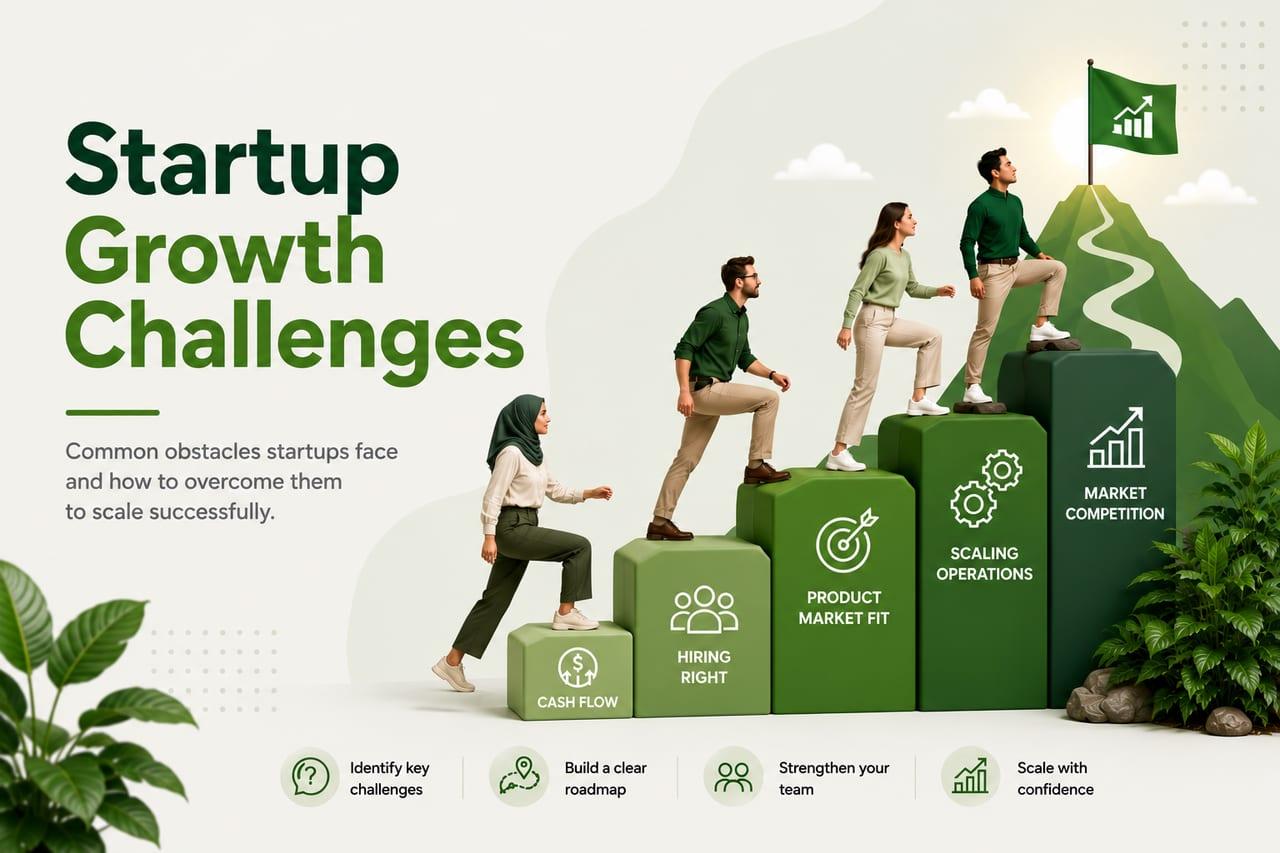 Organization DevelopmentThe Real Challenges of Scaling a Startup (And How to Get Ahead of Them)5 min read
 Organization DevelopmentCulture Metrics for the Board — Stop Reporting the Weather8 min read