From Founder to CEO: Growing Into the Job as Your Company Grows
The hardest transition in a scaling company isn't a hire or a funding round — it's the founder's own role. Our Three Handoffs model maps the shift from doing the work to designing the system that does it.
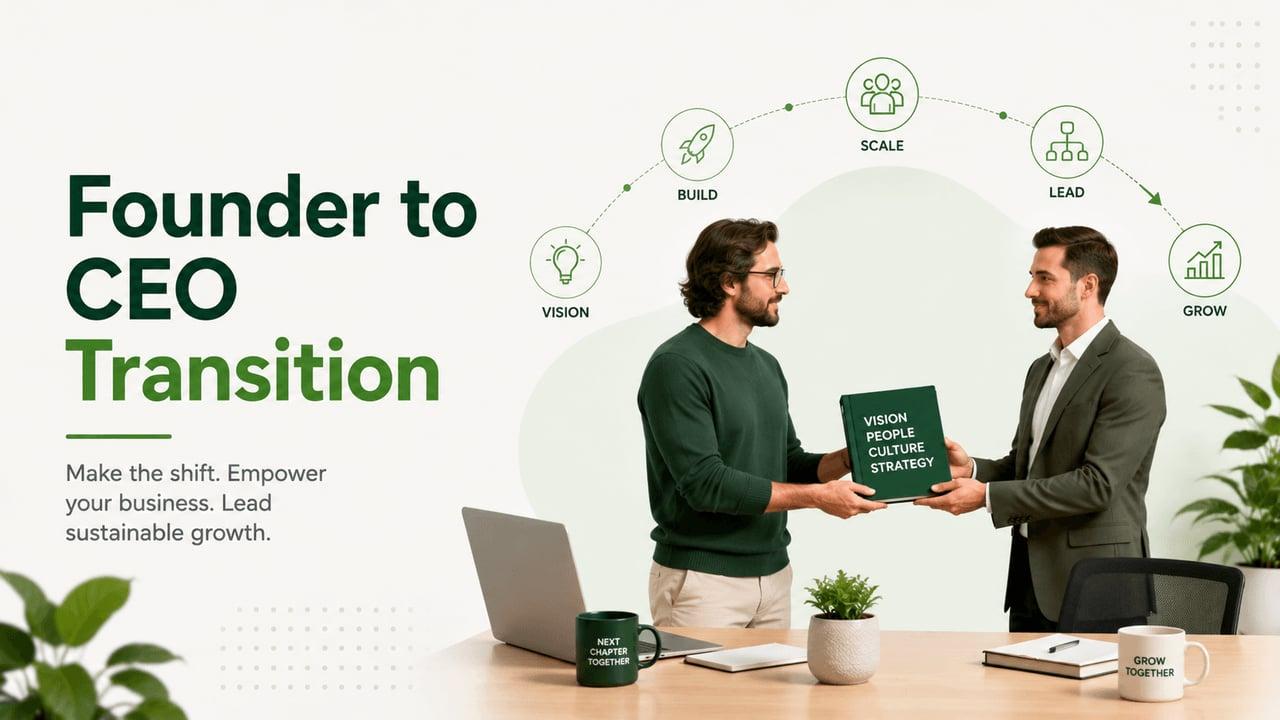
There's a transition every successful founder eventually faces, and almost no one warns them about it. It isn't a funding round, a key hire, or a product pivot. It's the quiet, disorienting realization that the job that built the company is not the job that runs it — and that the person who has to change most is you.
"I had to fire myself from my favorite job"
A founder we worked with put it bluntly: "I had to fire myself from my favorite job." For years she'd been the company's best salesperson: she closed the hard deals herself, and loved it. At around eighty people, she noticed her sales team had quietly stopped growing into the role, because the moment a deal got difficult, she swooped in and took it. "I was protecting my identity as the closer," she said, "and capping my team at the level I was willing to let them reach." Stepping back from the thing she was best at was the hardest (and most important) move she made as a leader.
That's the founder-to-CEO transition in one story. Founding is about doing. CEO-ing is about designing the system that does. They're different jobs that happen to share a chair.
The Three Handoffs
We frame the shift as three deliberate handoffs, the three things a founder has to consciously give away to stop being the company's ceiling:
1. Hand off the doing → take up the designing
Early on, your value is direct output: you write the code, close the deals, answer the tickets. That's right for that stage. But as you grow, being in everything becomes the thing holding the company back. The job shifts from doing the work to building the organization that does it: designing who decides and how, building the standards that hold quality, hiring and aligning the people who deliver.
The founder asks, "How do I solve this?" The CEO asks, "Who should own this, and what do they need to solve it well — and every problem like it — without me?"
2. Hand off the decisions → take up the decision system
If every call still routes through you, you haven't delegated authority — you've delegated work while keeping the bottleneck. The handoff isn't dumping decisions; it's designing how decisions get made: who owns which calls, who's consulted, and trusting people enough not to overrule them. Good companies push decisions to the people closest to the information.
3. Hand off the identity → take up the company
This is the deepest one. For years your self-worth was tied to being the one who does: ships, sells, solves. The highest-value version of you now does almost none of that directly. It can feel like you've become less essential even as you've become more important. That discomfort is the transition, not a sign you're failing it.
Why is the founder-to-CEO transition so hard?
Most of the founder-to-CEO struggle isn't intellectual — it's psychological, and that's consistent with what's long been observed about founder transitions: the skills that make a great founder (hands-on, fast, do-it-yourself) are nearly the opposite of the ones that make a great scale-stage CEO (delegation, system-building, patience). The founders who make it stop measuring themselves by their personal output and start measuring themselves by the health and capability of the organization they've built. The question changes from "Am I still the one solving the hard problems?" to "Have I built a company that solves them well without me?"
How do you know if you're making the founder-to-CEO transition?
Signals you're making the transition (or not):
- Healthy: important decisions get made well when you're on vacation.
- Healthy: your calendar is dominated by people, direction, and structure, not firefighting.
- Healthy: your team brings you fewer problems and more decisions already made.
- Warning: everything still escalates to you.
- Warning: you're the smartest person in every meeting because you hired people to execute, not to think.
- Warning: growth has stalled at roughly the limit of your personal bandwidth.
Ask yourself
- What's the one thing you're best at that you most need to stop doing yourself?
- If you disappeared for a month, which decisions would simply wait for you?
- Are you measuring yourself by what you produce, or by what your organization can do without you?
- Where are you protecting your identity as "the one who does" at the company's expense?
The takeaway
Becoming a CEO isn't a promotion you're handed — it's a transformation you choose, repeatedly, usually against your own instincts. The founder builds the company; the CEO builds the company that builds the company. The whole job is learning to tell those two apart, and to make the Three Handoffs before your own bandwidth becomes the ceiling your company hits.
Frequently asked questions
- What is the founder-to-CEO transition?
- The shift from doing the work to designing the system that does the work. The founder skill set is direct intervention; the CEO skill set is building conditions that make intervention unnecessary.
- Which founder instincts stop working?
- The most valuable ones. Jumping in to fix things personally is what made the first phase survive and is exactly what prevents the second phase from developing its own capability.
- How do you know the transition is happening?
- Decisions of consequence start being made well without you, and you find out afterwards and agree with them.
- What are the Three Handoffs from founder to CEO?
- Hand off the doing to take up designing the system, hand off individual decisions to take up the decision system, and hand off your identity as the one who does to take up ownership of the company itself. The third is the deepest.
- Why is the founder-to-CEO transition so psychologically hard?
- Because the skills that make a great founder, hands-on and fast and do-it-yourself, are nearly the opposite of those that make a great scale-stage CEO. The struggle is rarely intellectual; it is letting go of an identity built on personal output.
Related articles
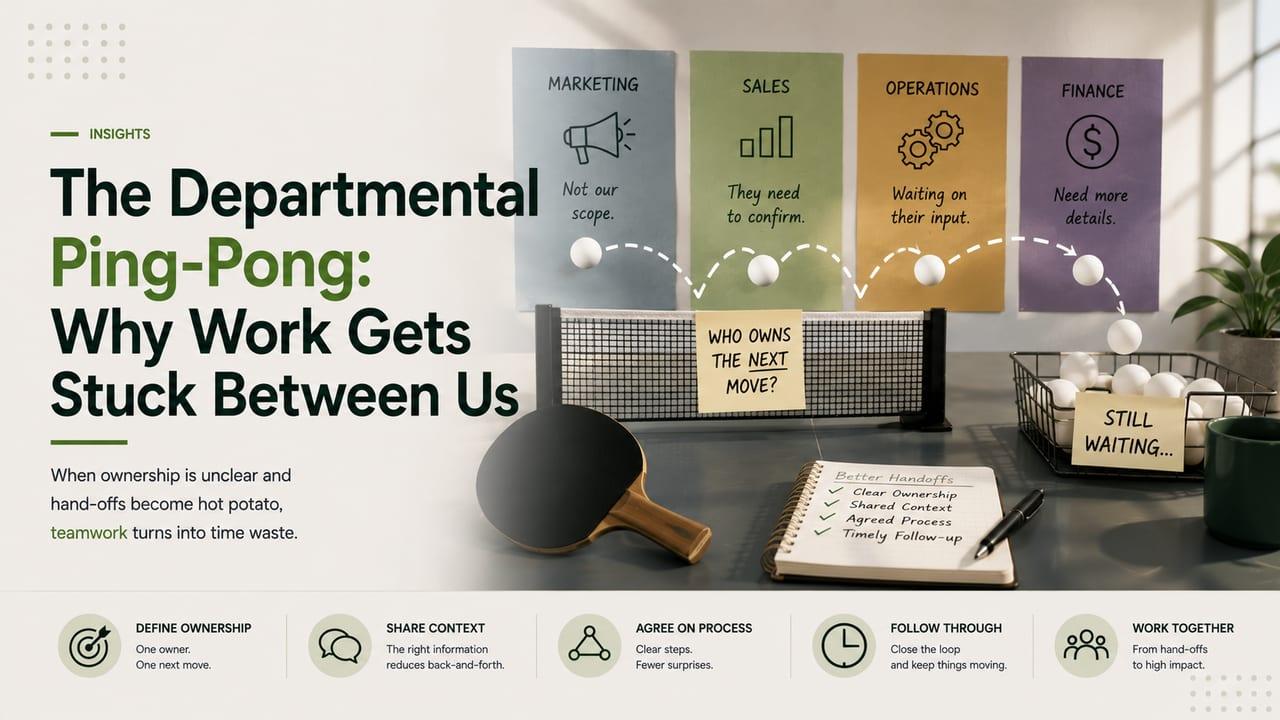 LeadershipThe Ping Pong Culture Nobody Talks About — And the One That's Quietly Killing Your Strategy7 min read
 LeadershipBuilding an Executive Leadership Team — Hiring Senior People Is the Easy Half7 min read
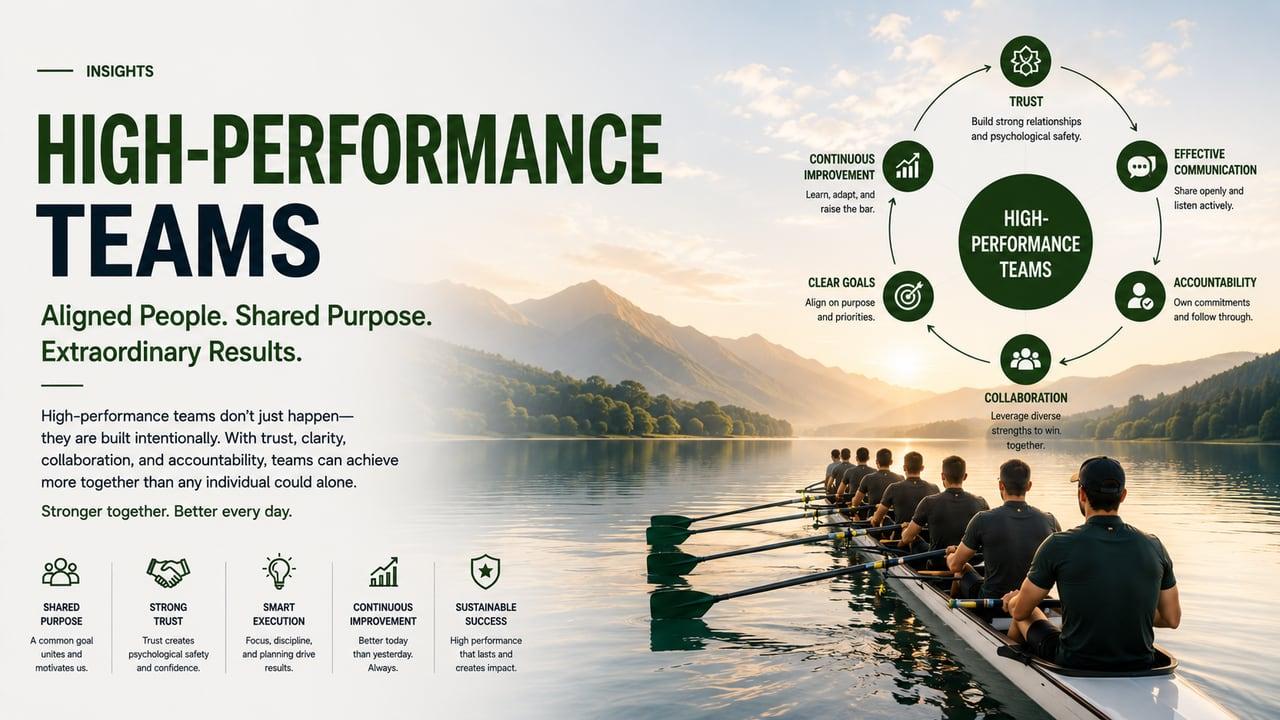 LeadershipHigh-Performance Teams: What Separates Them From Merely Busy Ones6 min read
 Organization DevelopmentThe Real Challenges of Scaling a Startup (And How to Get Ahead of Them)5 min read